Why Are Regular Coins on eBay So Overpriced?
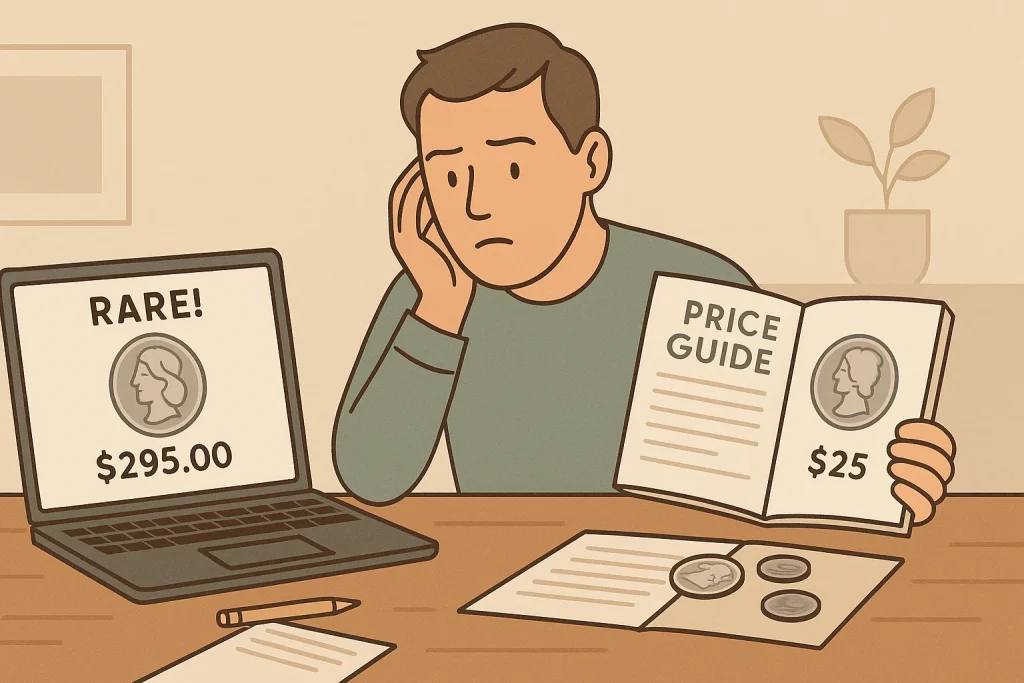
Anyone who has browsed eBay for everyday coins—Lincoln cents, Jefferson nickels, Washington quarters, Roosevelt dimes—has likely noticed the same trend: prices seem far higher than their actual numismatic value. A circulated quarter worth 25 cents suddenly appears at $2. A wheat cent listed at $10. A “rare” Jefferson nickel priced like a key date.
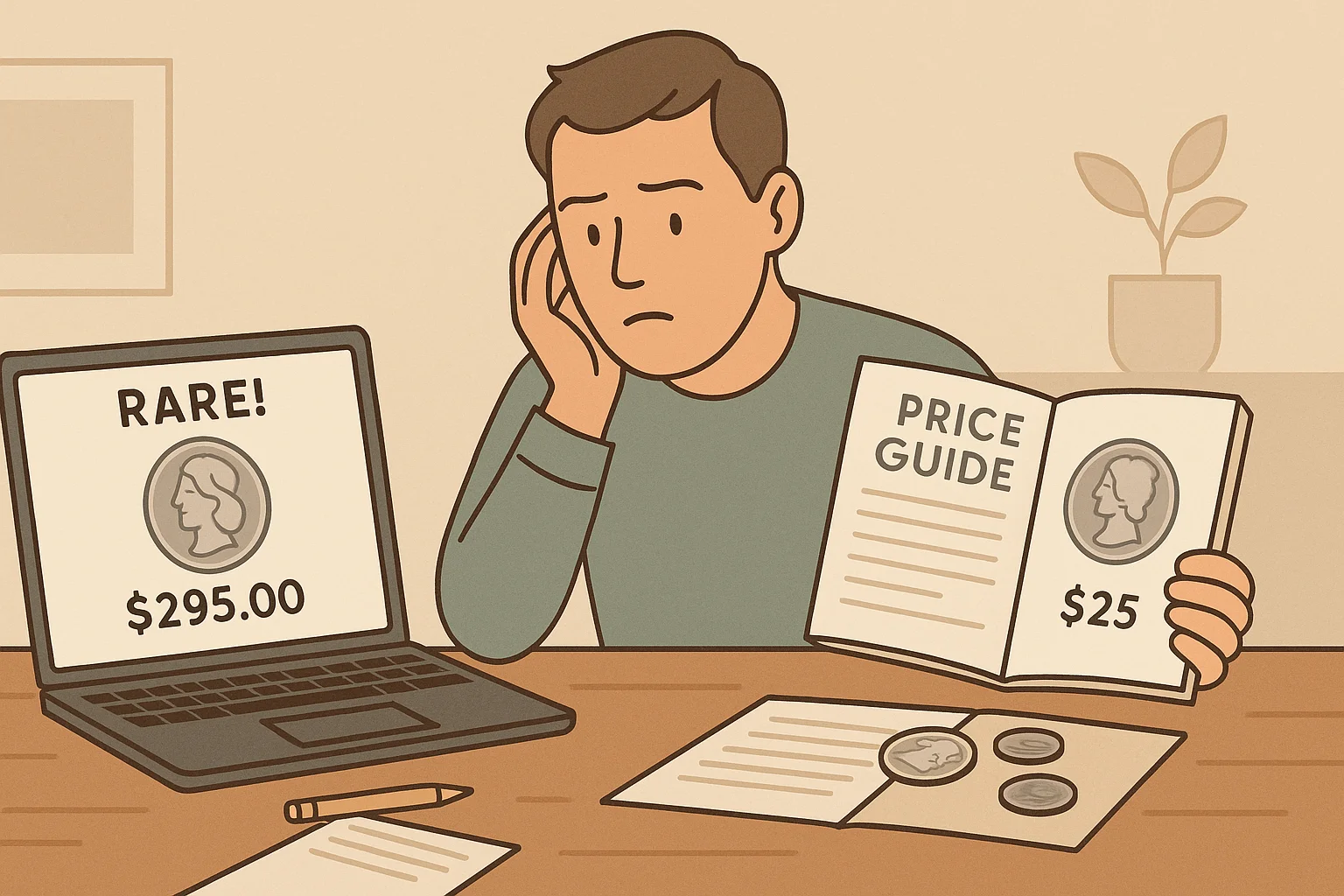
What is even happening there? Why is the coin value not matching any real adequate auction listing? For new collectors, this creates confusion. For experienced ones, it’s a familiar pattern shaped by how the platform operates.
Why eBay Favors Overpriced Listings
The root problem is not rarity. The vast majority of these coins exist in huge quantities. Population reports from major grading services confirm millions of examples survive in circulation-quality conditions. Yet many eBay listings inflate prices far beyond catalog values. The platform’s structure, combined with seller tactics and buyer assumptions, drives a cycle of overpriced common coins.
eBay’s marketplace is designed around visibility, turnover, and photo-driven engagement—not numismatic accuracy. This creates several pricing distortions:
1. Algorithmic Boosting of Photogenic Listings
Listings with clearer images, high seller feedback, and active engagement often receive better placement. These sellers tend to adopt higher Buy-It-Now pricing, knowing visibility compensates for overpricing.
2. Inexperienced Buyers Misreading Scarcity
Many buyers mistake the coin’s age for rarity. A coin from the 1940s may feel scarce to someone who rarely handles older circulation coins. Sellers exploit this misunderstanding by using vague descriptions like “vintage,” “old,” or “last one available.”
3. Fee Stacking and Built-In Markups
eBay fees, payment processing fees, and promotional boosts often consume 12–18% of the sale price. Sellers shift this cost to buyers, resulting in inflated price tags on even the most common items.
4. Shipping Charges Masking True Value
It’s common to see a $1 coin paired with $5–$10 shipping. For low-value coins, shipping becomes the real profit driver.
The Result: A Marketplace Detached From Real Value
These systemic incentives create a market where common coins appear rare, sellers build high margins, and buyers unfamiliar with actual price guides overpay. And if you don’t use the coin scanner app for constant verification, overpaying and composing a collection full of random samples.
Seller Tactics, Red Flags, and Why Buyers Keep Falling for Overpriced Listings
Overpriced common coins on eBay are not random accidents—they are often the result of calculated listing practices designed to create urgency, artificial rarity, or the illusion of premium value. Understanding these tactics is the key to avoiding inflated prices and spotting misleading listings before clicking “Buy It Now.”
1. Buy-It-Now Inflation
Many sellers list coins at fixed prices that sit 20–50% above recent sold listings. They rely on impulse buyers who skip checking the “sold items” filter. These inflated listings often appear first in search results due to boosted visibility or promoted status.
2. Shipping Markups
A circulated coin worth 25 cents may be priced at $1–$2, yet the shipping fee jumps to $5–$10. For sellers, shipping becomes the profit center. Terms like “secure packaging” are often used to justify unnecessary postage costs.
3. Fake Scarcity Through Vague Descriptions
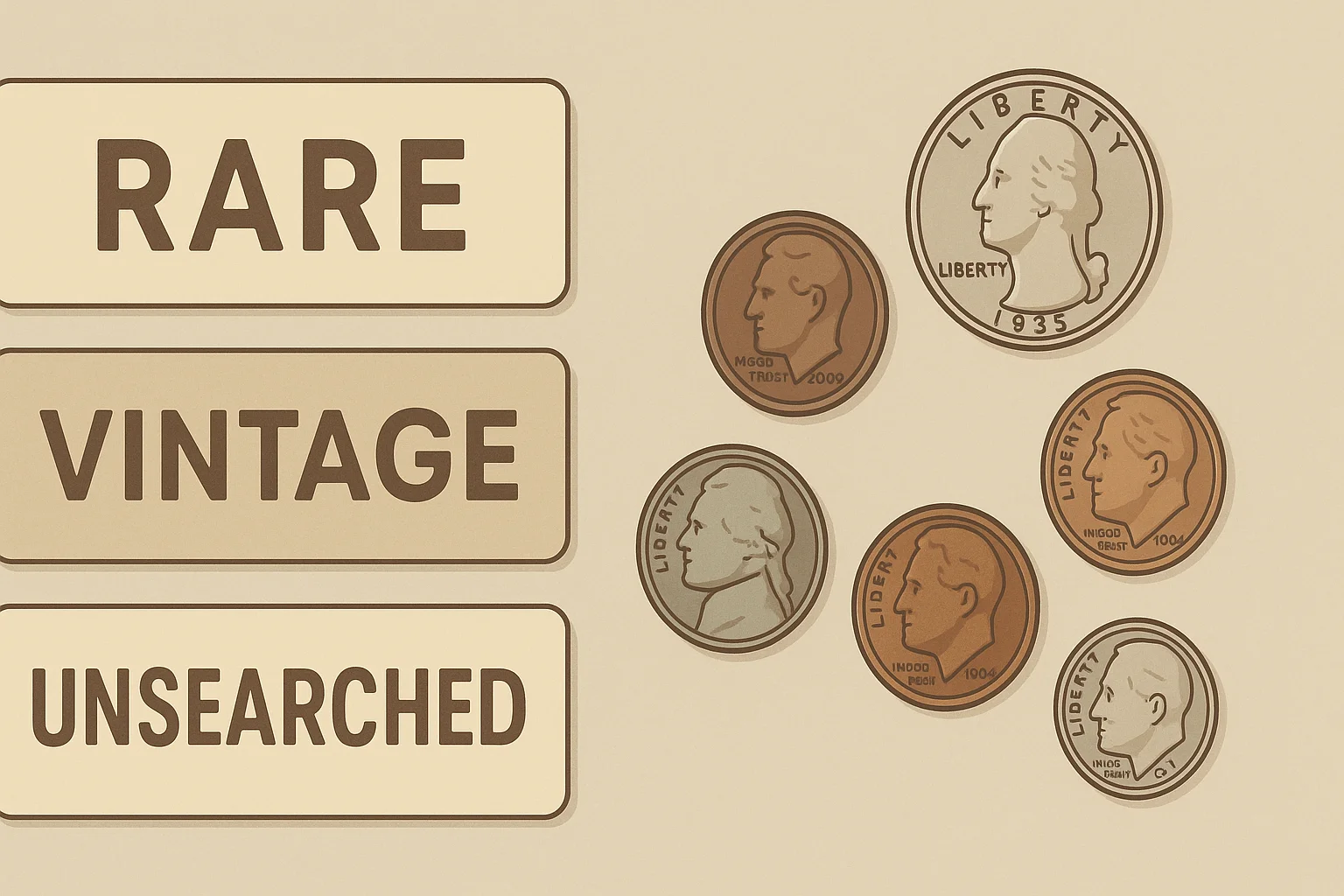
Terms like “rare,” “vintage,” “key date,” “only one available,” “unsearched,” or “estate find” appear frequently. Many of these listings feature:
- Common dates
- High mintages
- Coins with visible wear
- No grading references or condition standards
These descriptors target buyers who assume unusual wording signals numismatic significance.
4. Misused Terminology
Some listings misuse technical vocabulary to inflate value:
- “Toning” becomes a substitute for discoloration
- “Mint error” is applied to post-mint damage
- “Original condition” describes coins that are heavily worn
The result: common circulation coins sold at premium prices based on poor terminology.
Why Buyers Overpay: The Psychology Behind eBay Prices
Several factors contribute:
- Lack of numismatic knowledge: Many buyers are new collectors.
- Assumptions about age: Older coins feel scarce, even if millions exist.
- Convenience: eBay offers global access, so buyers pay for simplicity.
- Competitive bidding: Auctions encourage emotional decisions, not rational pricing.
This dynamic creates a perfect environment for inflated prices on everyday coins.
Smart Buying Strategies and Tools to Avoid Overpaying on eBay
Overpriced coins on eBay are avoidable once you understand how to evaluate listings, verify real market values, and cross-check information before purchasing. With the right tools and strategy, collectors can bypass inflated prices and focus on genuine deals.
Before buying anything on eBay, confirm the coin’s true worth using trusted resources:
- PCGS Price Guide: Accurate market ranges based on certified sales.
- NGC Census and Explorer: Confirms population reports and scarcity.
- Heritage Auctions Sold Archives: Provides real-world prices from competitive bidding.
- US Mint archives: Helpful for checking real mintage numbers.
These references often show that coins listed for $10–$20 on eBay regularly sell for much less through professional channels.
Digital Tools That Make Verification Simple
Modern collectors rely on mobile tools that simplify identification, authentication, and pricing. The most versatile option is the Coin ID Scanner app.
Why it helps buyers avoid overpriced coins
The coin value checker uses photo identification to show:
- Mint year
- Issuing country
- Coin type
- Metal composition
- Edge and strike details
- Diameter and weight
- Market price ranges
It also features collection management, smart filters (premium), and an extensive database of 187,000+ coins, plus an AI Coin Helper to break down history, varieties, and quick price comparisons. These features expose misleading eBay listings instantly by comparing real data against seller claims.
Strategies for Finding Better Deals
Smart collectors skip inflated listings by using structured buying habits:
- Check eBay “sold items” before bidding.
- Avoid listings with vague descriptions or unclear photos.
- Ignore inflated shipping—filter by “free shipping” or combine orders.
- Shop certified coins from reputable dealers such as APMEX or JM Bullion.
- Check Sixbid and NumisBids for global auctions with transparent prices.
- Visit local coin shows where negotiation is easier and premiums are lower.
For foreign common coins, apps like Coin ID Scanner help confirm authenticity and typical pricing before buying in bulk.
Regular coins appear overpriced on eBay due to inflated listings, fee-driven markups, algorithmic visibility, and buyer inexperience. Once you understand these dynamics, you can navigate the platform confidently. With accurate pricing tools, verification apps, and smarter buying practices, collectors avoid inflated costs and build stronger, more valuable collections—without falling into the common traps seen across the marketplace.